

In the age of AI answers, “ranking” is only half the job – your content has to be extractable, citable, and consistently understood.
If you already know SEO fundamentals, you’ve probably felt the shift: the SERP is no longer just ten blue links. Users increasingly encounter AI-generated summaries and conversational answers that address their queries before a click ever happens.
That doesn’t mean SEO is dead. It means the surface area of SEO has expanded. Your job now is to win two visibility battles at once:
- Classic rankings and organic clicks, and
- Inclusion in AI-generated answers (where attribution may be selective and clicks may decline).
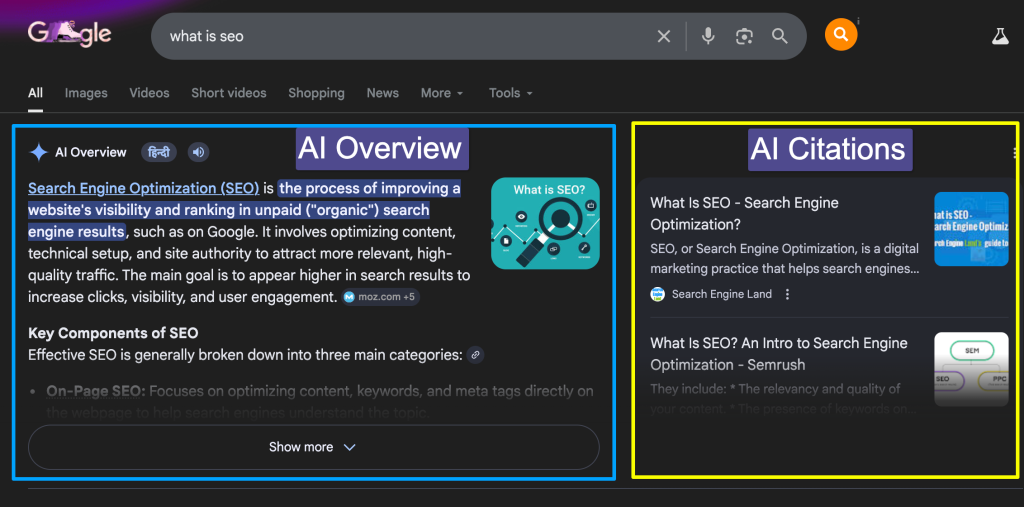
From the beginning of Google, Search Engine Optimization (SEO) has been the process of improving a website’s visibility and ranking in unpaid (“organic”) search engine results. It involves optimizing content, technical infrastructure, and site authority to attract more relevant, high-quality traffic. The main goal of traditional SEO has always been to appear higher in search results to increase clicks, visibility, and meaningful user engagement – whether through strategic keyword use, on-page structure, backlinks, or technical excellence.
What is AI SEO (and What It Is Not)
AI SEO is best thought of as the practice of making your content discoverable, extractable, and trusted across AI-powered search experiences. In other words, you’re not only optimising for rankings, but also for retrieval and citation inside AI-generated answers.
It’s not about “replacing your SEO team with a chatbot” or pumping out hundreds of AI-written blogs a week. In fact, one of the most consistent warnings in AI SEO guidance is that over-automation leads to generic content and accuracy risks – especially when AI tools produce confident-sounding errors (hallucinations).
A durable way to describe the AI-and-SEO relationship is:
- Traditional SEO provides the foundation (crawlability, relevance, user experience, authority).
- AI SEO adds new success conditions (entity clarity, passage-level extractability, cross-surface consistency, and citation-worthy evidence).
Why AI Search Changes the SEO Game
AI answers change user behaviour, not just page layouts
When AI summaries appear, users click less on regular results. A Pew Research Center analysis of ~68,000 Google searches (March 2025 data) found that users clicked a traditional result in only 8% of searches with an AI summary, compared to 15% when no summary was present. And clicks on the cited sources inside the AI summary were even rarer – just 1% of all visits where a summary appeared.
The implication is uncomfortable but actionable: you can “win” visibility (your content gets shown in an AI answer) and still see fewer clicks. An AI SEO strategy, therefore, has to care about brand presence, citations, and downstream conversion paths, not just raw traffic.
Where your article can outperform this competitor set is by being explicit about how AI search works operationally, what that implies for content architecture, and how to measure success when clicks decline. Two particularly differentiating angles are now well-supported by primary/credible sources:
- AI answers reduce clicks and change user behaviour. A Pew Research Center analysis (March 2025 browsing data; 68,879 Google searches analysed) found that when an AI summary appeared, users clicked traditional results less often (8% vs 15% without summaries) and clicked cited sources in the summary very rarely (1%).
- Platform reporting is evolving from “rankings” to “citations.” Microsoft introduced an AI Performance dashboard within Bing Webmaster Tools, reporting citation activity (total citations, cited pages, grounding queries, URL-level citation counts) rather than ranking.
These changes create a clear editorial opportunity: write the definitive “AI SEO strategy” piece that treats extractability, entity clarity, and citation measurement as first-class SEO concerns – without pretending traditional SEO no longer matters.
For content strategy, “query fan-out” translates into a simple editorial rule: If your page doesn’t answer the obvious follow-up questions, the AI system will fan out to other sources that do. In other words, pages perform best when they’re structured like decision-support documents: introduction → direct answer → supporting evidence → comparisons → edge cases → next steps. If you leave gaps, the AI will fill them from elsewhere.
AI SEO vs. GEO vs. AEO vs. LLMO | Differences
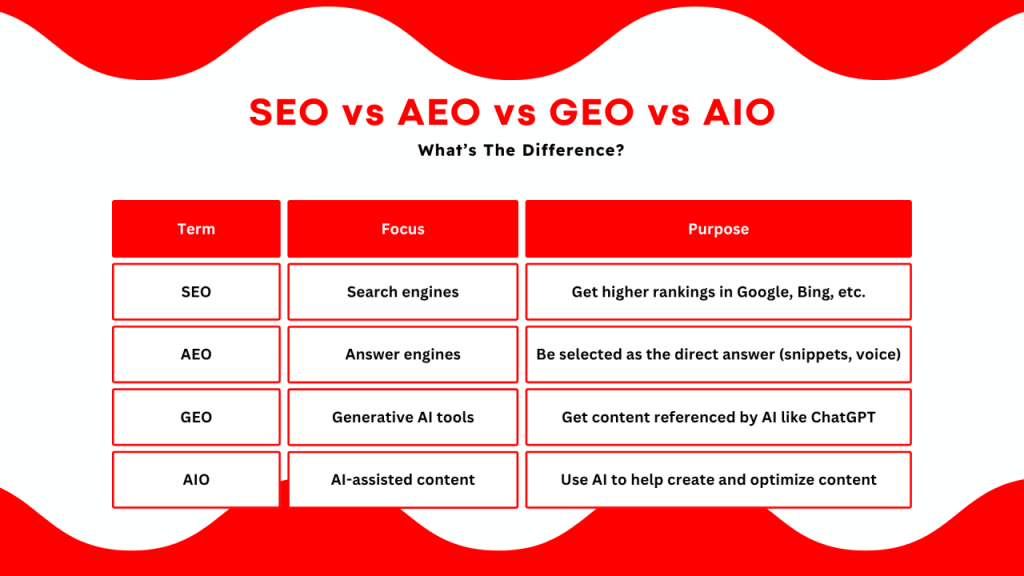
Alongside “AI SEO,” you’ve likely seen newer acronyms like GEO, AEO, and LLMO. Here’s a clean way to think about them:
- GEO (Generative Engine Optimisation): Positioning your content and brand so that AI platforms cite or mention you in generated answers.
- AEO (Answer Engine Optimisation): Structuring content so search engines can easily extract direct answers (think FAQs, featured snippets, concise definition boxes).
- LLMO (Large Language Model Optimisation): Shaping content at a deeper knowledge level – clarifying entities, ensuring consistency, providing source context – so that large language models interpret and reference it correctly.
The key point: you don’t choose one approach over the others. AI SEO is the umbrella discipline that integrates all of these, built on core SEO fundamentals. As one industry recap put it, keywords alone are no longer the whole game; AI systems put more weight on clear entities and contextual authority (they have to summarise and recommend, not just match keywords). In practice, that means writing for meaning and trustworthiness, not just search terms.
Measuring AI SEO (KPIs When Clicks Decline)
If you measure success only by traditional clicks and rankings, you’ll miss how your content is performing in AI contexts. Here’s how to adjust your measurement mindset and tools for the AI search era.
What Google gives you (and what it doesn’t)
Google has made it clear that traffic from AI features is folded into your existing Search Console data, rather than broken out separately. According to Google’s documentation, pages shown in AI Overviews or AI Mode are counted in the normal Search Console Performance report under the “Web” search type. In other words, there’s no special dashboard telling you “this page appeared in X AI answers and got Y clicks.” It’s all mixed together (and Google currently has no plans to provide an AI-specific breakdown).
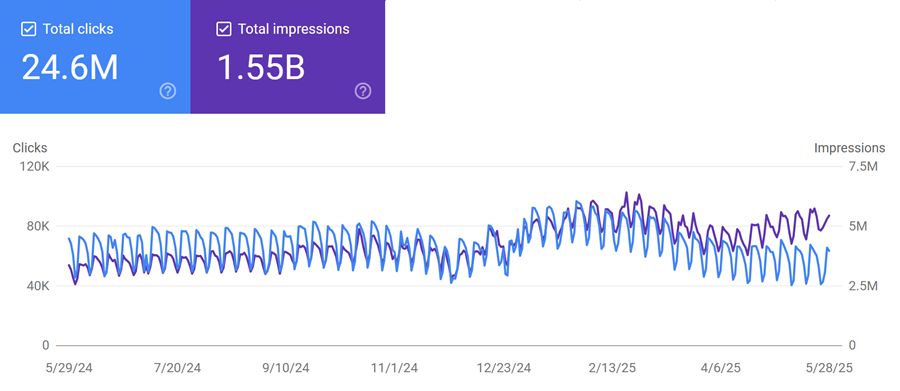
Google also notes there are no additional steps needed to optimize for AI features. That’s good (no new meta tags or schema to implement), but it also means we don’t get new analytics beyond what we already have. So for now, you’ll have to infer AI impact indirectly – for example, noticing that a page with stable rankings is getting impressions but fewer clicks (perhaps because users are getting their answer from the AI blurb).
Action tip: Monitor queries that are likely to trigger AI summaries (like longer, question-like queries). If you see impressions rising but clicks not following, that could indicate your content is being shown in an AI Overview. You might then pivot to tracking softer metrics like brand mentions or just take it as a sign to double-down on conversion opportunities on the page (since fewer people may be clicking through).
What Bing gives you: citation reporting
Microsoft, on the other hand, is experimenting with more transparent reporting. Bing Webmaster Tools introduced an AI Performance dashboard in early 2026 that focuses on citations rather than classic rankings. This tool shows which URLs from your site are being cited in Bing’s ChatGPT-powered answers and other generative experiences, how often they’re cited, and even some of the queries that led the AI to your content. Key metrics include total citation count, average cited pages per day, page-level citation activity (which pages get referenced the most), and “grounding queries” (the actual search phrases that triggered your content to be used).
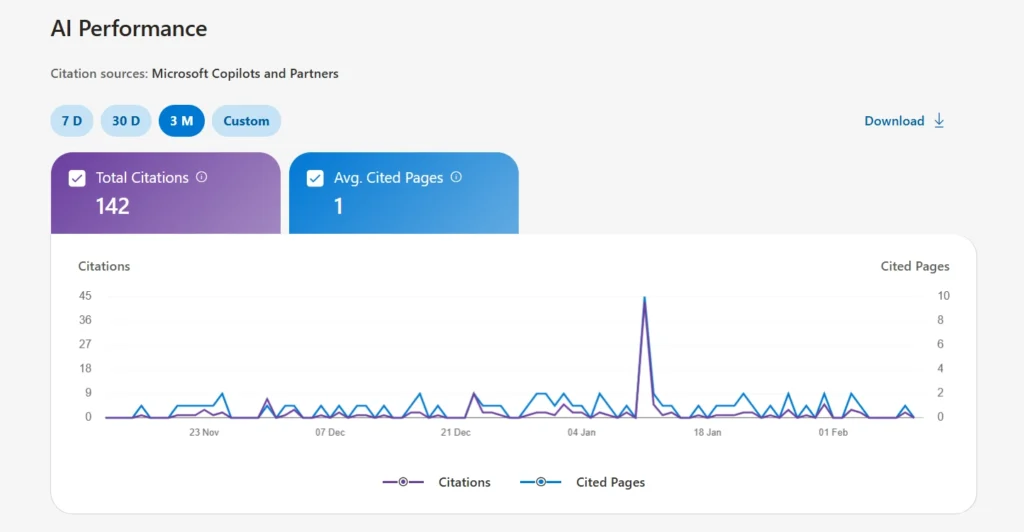
This is a big shift: instead of asking “what’s my average position for keyword X,” you’re looking at “how many times did AI answers cite my site this month, and for what topics?” It’s one of the clearest moves toward an AI visibility metric we have. Keep in mind, these citation counts don’t tell you if users clicked those citations (often they don’t), but they do tell you if you’re present in the conversation.
If you have access to Bing Webmaster Tools, it’s worth checking this AI Performance report. For example, you might discover that one of your long-tail how-to guides is being cited frequently in AI answers about a certain topic-this insight could prompt you to update that guide, add a call-to-action within it (assuming some users do click through), or create more content around that cluster since Bing’s AI clearly “likes” it.
Practical KPI set for the AI-era SEO
To gauge your performance in this new landscape, consider a blended scorecard that mixes old and new metrics:
- Classic SEO metrics: Organic rankings, impressions, clicks, and conversion rate from organic traffic (non-brand). These tell you if you’re still competitive in traditional search results, which remains important.
- AI visibility metrics: Citation counts (if available), frequency of your content being mentioned or used in AI answers, and even qualitative checks (e.g. periodically trigger some AI queries and see if/where you appear). Also monitor branded search volume or direct traffic over time – if people see you in an answer but don’t click, they might search your brand later or go to your site directly.
- Business outcomes: Ultimately, track lead or sales conversions, revenue, or whatever “conversion” means for you. You may need to expand your attribution thinking: an AI answer might lead to an offline action or a later visit. Surveys or user research can help here (for example, asking leads “How did you hear about us?” to see if they mention seeing your content in an AI result).
The main idea is not to obsess over the click-through rate on every single query. Yes, AI will siphon some clicks, but if your content is being surfaced, it’s still adding value. Adjust what success looks like: being included in the answer might become as coveted as position #1 used to be.
Common Mistakes in AI SEO (and How to Avoid Them)
The fastest way to lose in the AI-driven search era is to treat AI SEO as a gimmick or a completely separate project from your core SEO. Based on various best-practice guides, here are common mistakes – and their remedies:
- Treating AI SEO as separate from SEO fundamentals: Some teams spin up an “AI SEO” project and neglect basic SEO.
Fix: Integrate AI considerations into your existing SEO workflow. Ensure technical SEO, quality content, and link-building are still solid, then layer AI optimisations on top.
2. Over-focusing on keywords instead of entities and clarity: Writing that’s stuffed with keywords but unclear in meaning will confuse AI models (and users).
Fix: Prioritize clear language and define your terms. Use keywords naturally, but make sure an AI can easily identify who/what your content is about.
3. Publishing high volumes of AI-generated content without human quality control: This often leads to generic, thin pages (and even factual errors) that hurt your site.
Fix: If you use AI to generate drafts, edit them thoroughly. Add unique insights and ensure every piece has a purpose. Remember Google’s helpful content policy – they don’t ban AI content outright, but they do penalize low-quality, unhelpful content.
4. Optimizing only for rankings, not for answer inclusion: You might rank #1 and still not be the source an AI pulls.
Fix: Structure your content for extractable answers. Use schema where appropriate (FAQ schema for Q&As, HowTo schema for instructions, etc.), write those answer-first snippets, and keep content fresh and factual.
5. Failing to measure beyond traffic: If you only report on visits, the first time an AI summary steals a chunk of clicks, you’ll think you’re failing when you might actually be succeeding in visibility.
Fix: Track those citation and mention metrics, and educate stakeholders that brand visibility can pay off in ways not immediately captured by click data.
Pro tip: Set up an editorial checklist to catch these mistakes before you publish. (We’ll provide one in the next section.)
Quality, Measurement, and Governance for AI SEO
A strong article about AI SEO can give you a ranking boost, but a strong AI SEO program requires ongoing governance and quality control. Why? Because AI systems can misinterpret content, summarize without context, or surface outdated info. (Both Google’s AI Overviews and AI Mode explicitly warn users that AI-generated answers may include mistakes.) You don’t want your brand to be the one providing a confidently wrong answer in an AI result.
Here’s a publication-grade QA checklist to apply before and after you hit publish on AI-optimized content:
- Evidence and verifiability: For any key stats or claims, include a citation or link to a reliable source. Ensure that source is indexable and likely to stick around. This not only boosts your credibility with readers, but content backed by evidence is more trustworthy for AI to cite. (If an AI summary is choosing between two sources to reference, the one with a clear cited fact might be preferred as it appears more authoritative.)
- Extractable structure: Do a scan of your page outline and snippets. Does each section answer a question directly? Can someone glean the main point by reading just the first sentence of your paragraphs? If not, tweak it. Also ensure your headings actually reflect the content (misleading or cute headings don’t help AI or users).
- Entity consistency: Double-check that you’re using names and terms consistently. For example, if your company name is mentioned, use the exact same spelling and punctuation each time. If you refer to “Search Engine Land” in one paragraph don’t call it “SEL” in another without clarifying the acronym. Consistency helps AI systems “connect the dots” that all these mentions are the same thing.
- Freshness cadence: Identify parts of your content that might go out of date (e.g. tool features, platform announcements, stats like the Pew study). Set a reminder to review and update those on a schedule (say, quarterly or bi-annually). AI models and search algorithms tend to favor fresh information, especially in fast-moving fields like AI in SEO.
- Measurement baseline: Before you implement major AI-focused updates, record your current state. For example, if you have Bing Webmaster Tools, note your citation counts for important pages. In Google Search Console, note impressions/clicks for queries you expect to be impacted by AI summaries. This gives you a baseline to measure against after changes. It’s easy to attribute gains or losses to AI if you don’t have data – better to have the numbers.
This governance layer is a big differentiator between simply doing “SEO as usual” and running an AI-aware SEO program. It aligns your content creation with how modern search (and discovery) actually works. By enforcing evidence, clarity, consistency, and freshness, you increase the likelihood that AI systems interpret your content correctly and deem it worthy of inclusion.
Is AI SEO just “using AI tools for SEO”?
Not exactly. Using AI tools (for research, automation, etc.) is part of AI SEO, but AI SEO also means optimising your content to perform well in AI-driven search results. It’s about making content that AI wants to quote or cite, not just using AI to make the content. Think of it as two sides: AI in SEO (tools and automation), and SEO for AI (optimising for AI outputs).
Can AI replace SEO specialists?
No – at least not if you want a quality outcome. AI can handle data crunching, generate drafts, and automate routine tasks, but it lacks human creativity, strategic thinking, and the ability to understand nuance and context. The best use of AI is to augment SEO experts, not replace them. (Most credible guides, from Semrush to Salesforce, frame AI as a force multiplier for SEO tasks, with humans still in the driver’s seat for strategy, editing, and decision-making.)
Do I need special schema or “AI files” to appear in AI Overviews or AI Mode?
No. Google’s guidance states that no special tags or schema are required for AI features. Just follow foundational SEO best practices: ensure your page can be indexed and is helpful to users. That said, using an appropriate standard schema (Article, FAQ, HowTo, etc.) that matches your content is always a good idea, as it makes your content easier to understand and perhaps extract. But you don’t need an “AI SEO meta tag” or anything of the sort.
What content format works best for AI SEO?
Content that is concise, well-structured, and supported by evidence. In practice: pages with a clear Q&A structure, or explanatory articles with summary paragraphs, do well. FAQs on a page can help. Step-by-step how-tos with each step clearly delineated can also perform nicely (for procedural queries, an AI might list the steps from your page). The common thread is clarity – both in writing and formatting. Also, content that demonstrates first-hand expertise or original insights is valuable; remember, if everyone is using the same AI tools to write, a purely AI-written page won’t stand out to an AI summary bot. Your unique expertise is your competitive advantage.


Leave a Reply to A WordPress Commenter Cancel reply